How the pads are designed

Each pad starts from a rest position. This page is every product, not only the leg wedge.

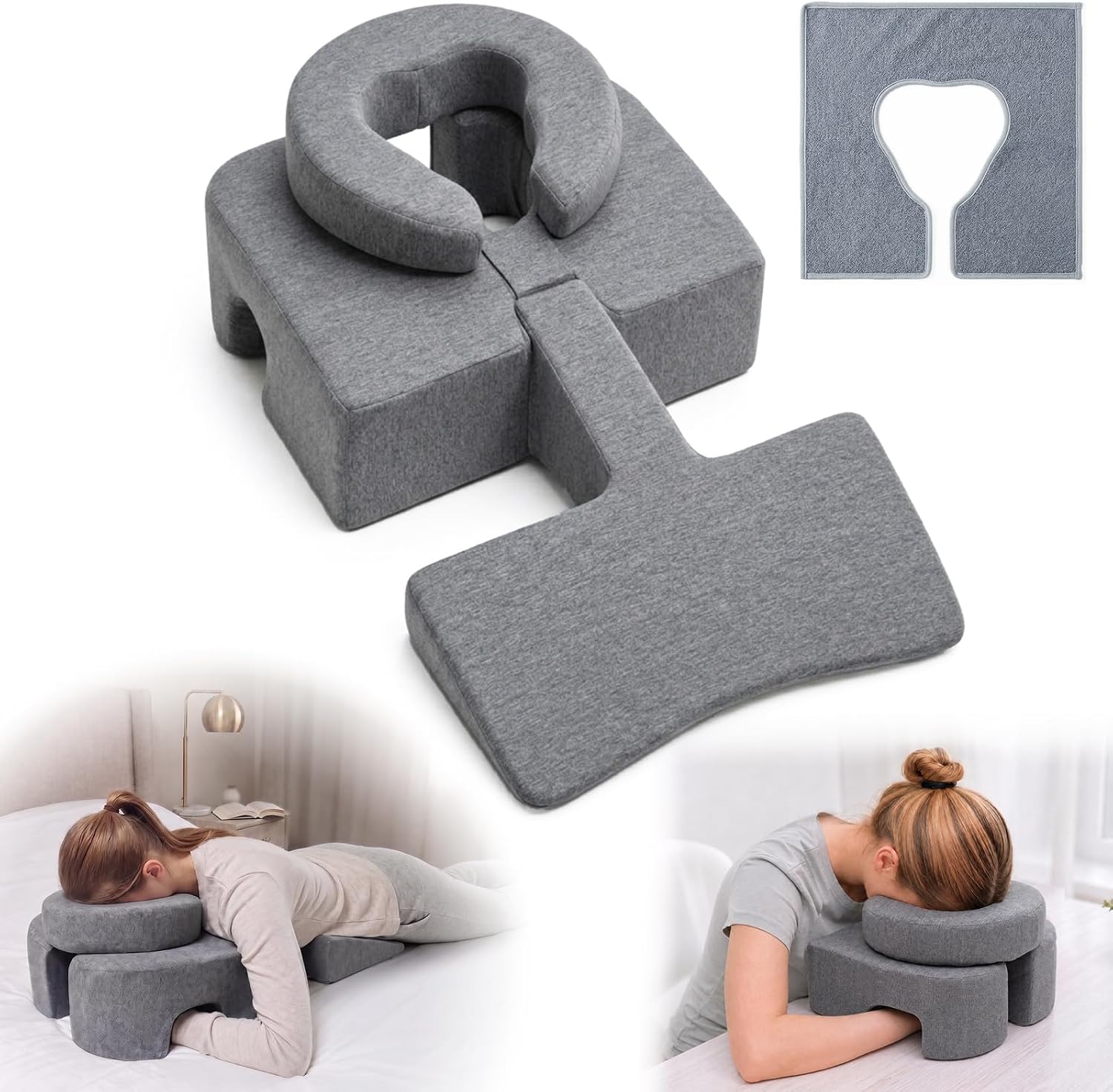
Grey two-module face-down pillow: circular head cradle on a cutout base, with a sliding T-shaped chest riser. Insets show the washable face cover, prone on a bed, and seated at a table.
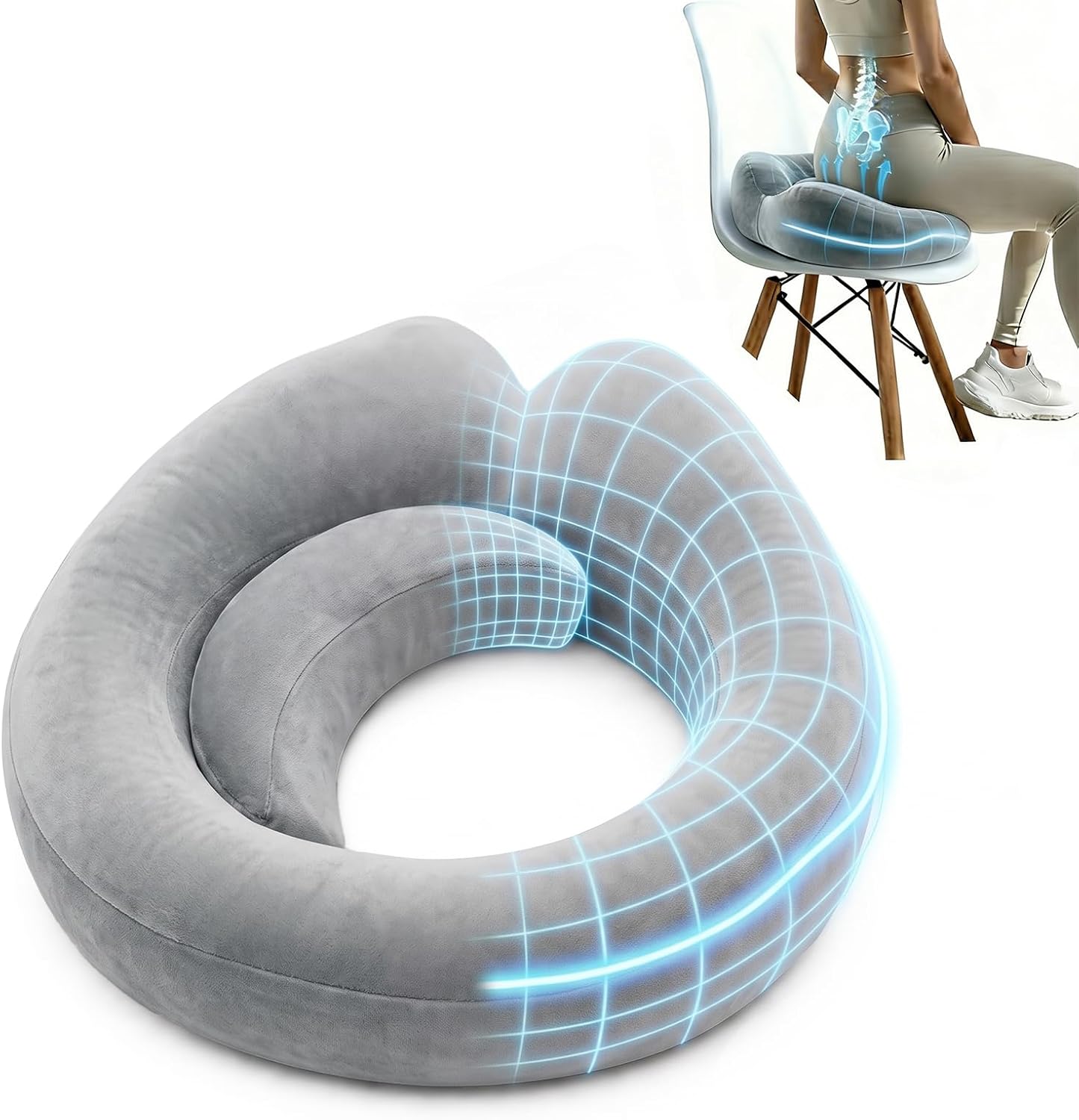
Gray round BBL sitting donut with a crescent insert, and a person sitting so weight is on the thighs, not the center.
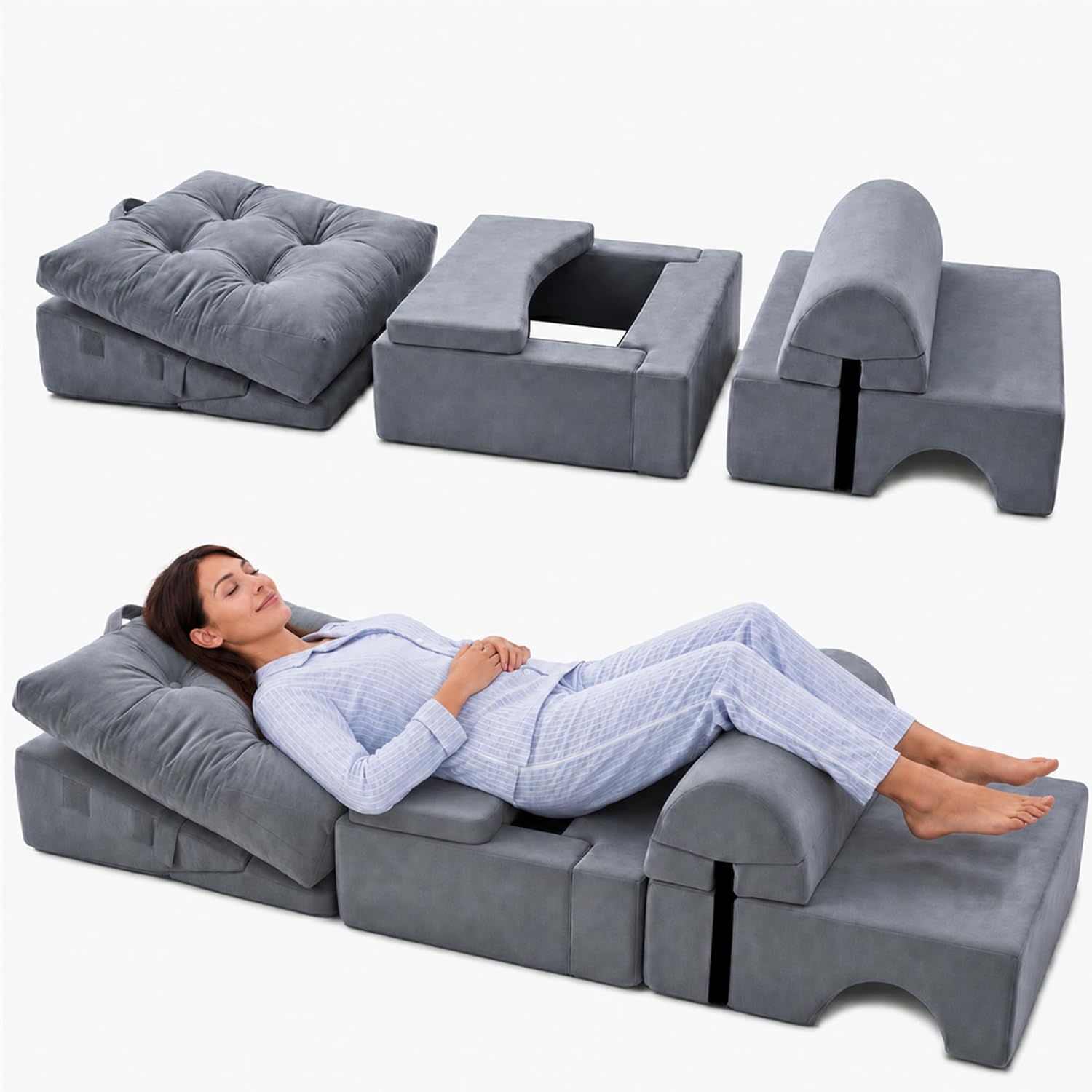
Nine-piece gray V-bed laid out as torso wedge, hip-opening block, and knee bolster; below, a person lies with the buttocks in the open middle.
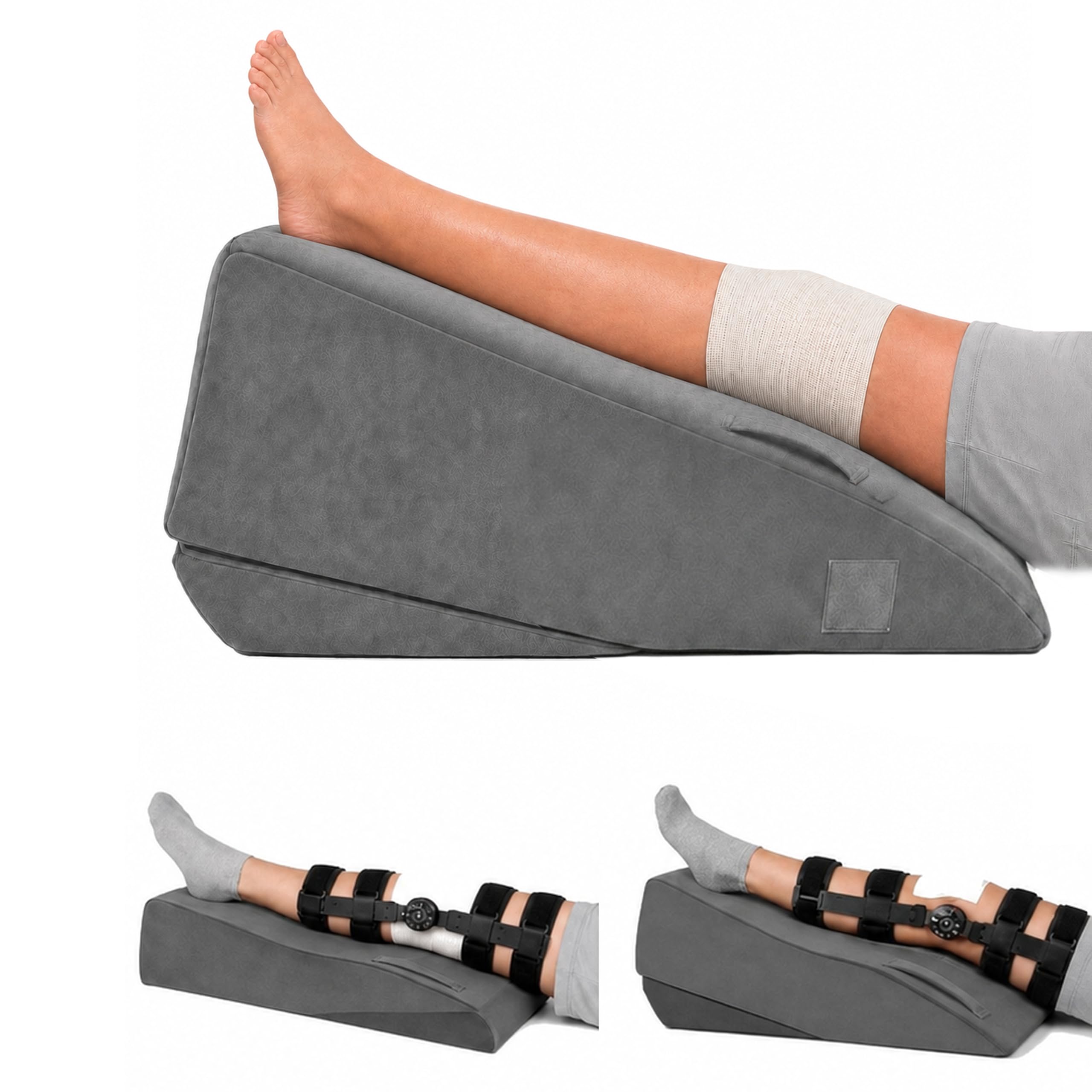
LYXOMED listing photo: a bandaged knee lies straight from thigh to heel on one continuous slope.
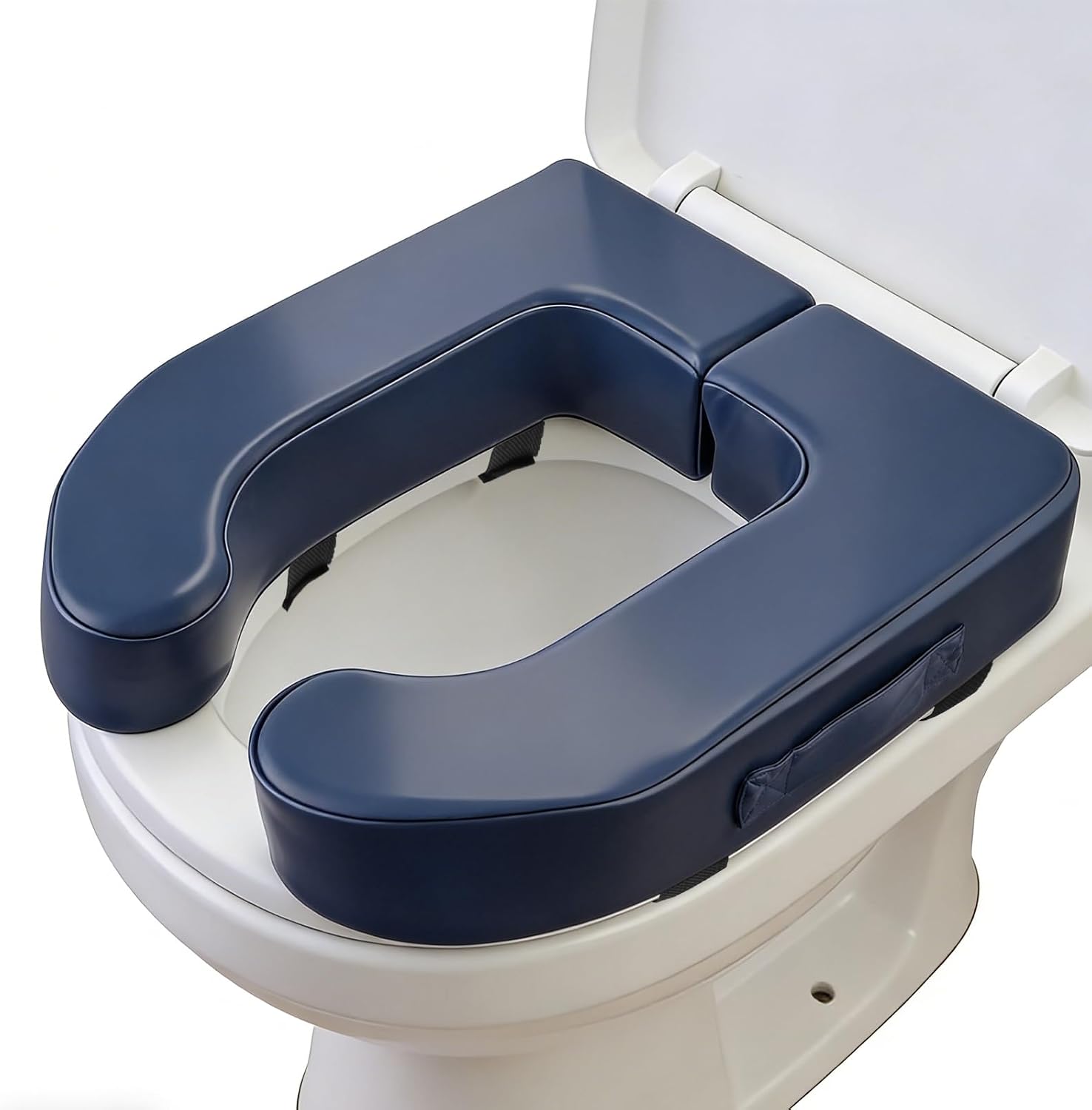
Navy foam toilet-seat riser strapped onto a white toilet, open front, side handle visible.
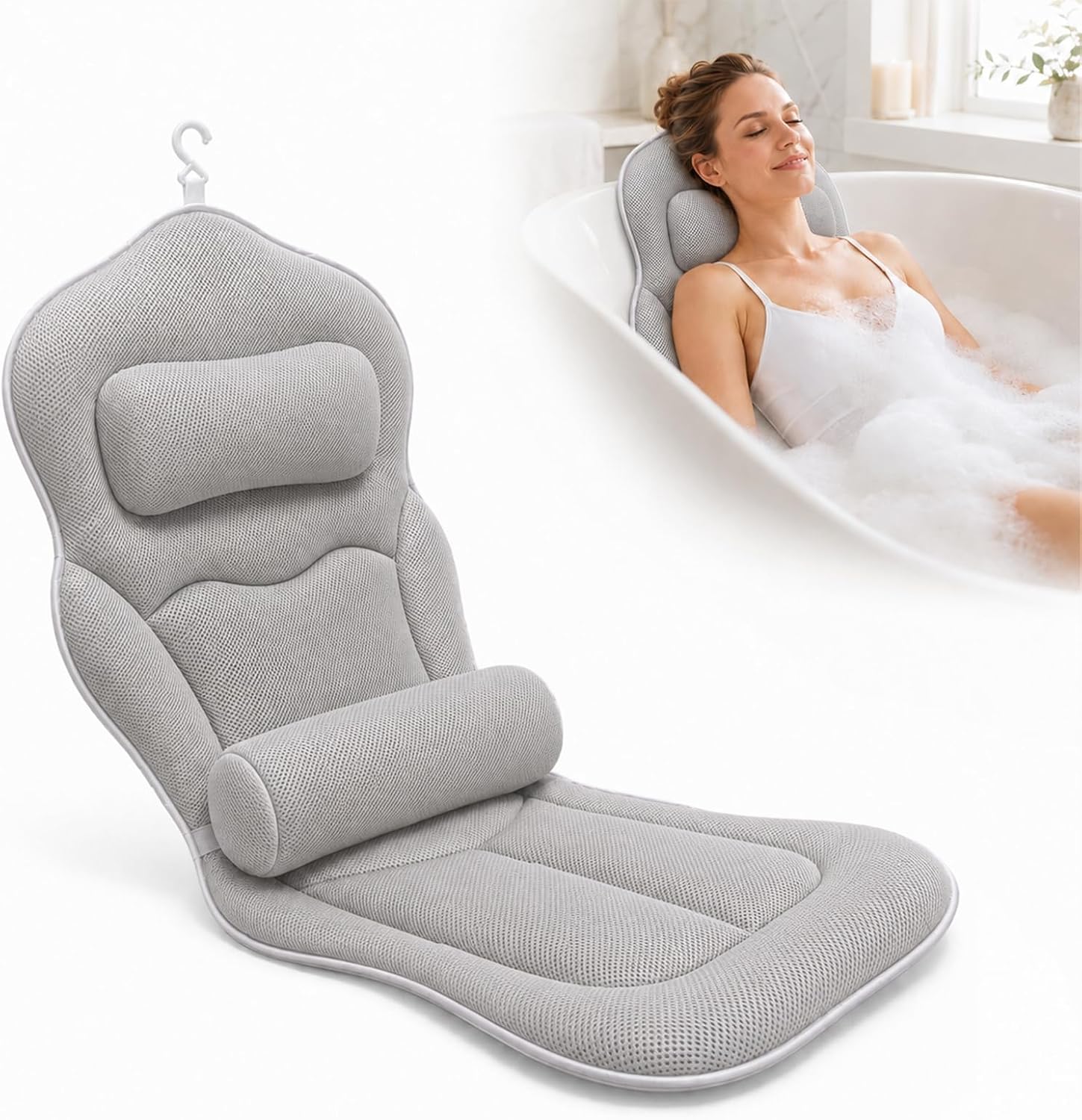
Grey full-length 50D mesh bathtub mattress with white piping, an integrated headrest, a cylindrical lumbar roll, a hanging hook, and a soak inset.

Face-down pillow

How it is designed

Two modules hold a face-down rest: an open head cradle and a sliding chest riser on a hook-and-loop track.

The listing image labels the head module about 11 × 11 in, with a 6.3 in cutout marked for hard eye covers. Side arches let the arms run through.

Why this shape

Folded bed pillows flatten the chest and close the space under the face.

This cradle stays open. The riser holds the ribcage up so you are not rebuilding the stack every hour. Hours of face-down rest come from your surgeon, not from this pillow.

BBL sitting cushion

How it is designed

This BBL sitting cushion is a round memory-foam donut. Weight goes on the outer ring and the backs of the thighs. The center is open.

A removable crescent changes the opening: leave it in for a smaller hole, take it out for a larger one. Same pad on an office chair, a car seat, or a chair at home.

Why this shape

A regular pillow under the whole seat still loads the graft. A fixed donut cannot change the opening.

The buttocks are not the load-bearing surface. This pad does not improve a graft.

Extra-thick V-bed BBL cushion

How it is designed

Nine extra-thick pieces make a V in bed: a wedge under the torso, a stack under the knees, and an opening at the hips.

The hip opening is adjustable — flip or move the center pieces. Space the modules for a shorter or longer torso. This is a full-length extra-thick V, not a chair donut.

Why this shape

A flat mattress or a thin pad still makes the buttocks the load-bearing surface. Soft pillows sink and close the gap.

Back-lying only if the surgeon allows that position. This pad does not improve a graft.

4-piece BBL sleeping set

How it is designed

Four modular pieces. Three make a center-opening sleep setup: U-shaped wedge for the thighs, a smaller piece for the low back, empty middle.

The fourth piece is a curved toilet pad. The center block is a footrest. High-density foam so the buttocks do not hit the mattress.

Why this shape

Stacked bed pillows sink and close the hole you need under the hips.

If you close the gap, you are back on a surface. Leave the gap under the hips. Only if your surgeon allows back-lying.

5-piece BBL sleeping set

How it is designed

Five modular pieces. Four make a sleeping setup with a center opening. The fifth is an extra wedge for height.

Pull the back wedge and the thigh wedge apart so the buttocks sit in the space. Do not close them.

Why this shape

Lying flat on a mattress makes the buttocks the load-bearing surface. Stacked pillows do the same once they flatten.

If you push the pieces together, the buttocks rest on foam. The fifth piece raises height; it is not a hole-fill.

Leg elevation wedge

How it is designed

One firm slope from thigh to heel so the knee can rest straight. Nothing tucks behind the joint.

A built-in triangle support board flips for two heights: 10.63 in or 7.87 in. A U-groove holds the heel. Room for a cast or hinged brace.

Why this shape

A pillow behind the knee keeps the joint bent. After ACL or TKA, sheets usually say not to.

Stacked bed pillows slide and tuck into the joint. A firm base holds the height you set. You flip a board instead of restacking the bed.

Sacral-coccyx cushion

How it is designed

Two-piece foam with a hollow center. Straps between the pads so you can slide the gap.

Thicker at the back than the front: 3.94 in and 2.36 in on the listing diagram. Gel over memory foam. Sit or lie so the sacrum and tailbone are not the load.

Why this shape

A flat pillow still puts the tailbone on foam. A one-piece donut has a fixed hole.

This is positioning. It is not a pressure-ulcer treatment.

Toilet seat riser

How it is designed

Foam that straps onto the toilet seat you already have. Hook-and-loop straps plus adhesive strips. No tools.

2 in or 3 in. High-density foam so it still has height when you sit. A zip cover you can wipe. It folds in half. A side handle.

Why this shape

A hard plastic riser is a rigid raised seat. This is foam on the seat you already have — softer after hip replacement, if it still holds height.

This is not an ADA listing and not a commode with arms. Follow your therapist.

Full-length bathtub pillow

How it is designed

A 56-inch 50D mesh mattress for the tub, from head to thighs. A movable 5.5 in lumbar roll. 168 suction cups.

The cups are for a smooth tub — not for textured surfaces. Hang the mesh to drip-dry. Gray or White.

Why this shape

This is a full-length tub mattress, not a neck pillow that floats away.

Folded towels slide, bunch, and stay wet. The 50D mesh is one piece. The cups hold on smooth enamel or acrylic.

Patient turning pillow

How it is designed

A U-shaped foam block with a handle. Place it under the knees, hold the handle, and assist the roll. An L-piece holds a side-lying position.

Dual-height base: U-block alone, or add the height pad. This is handle plus hold. It is not a pressure-ulcer treatment.
Why this shape

Loose pillows slide out of a side-lying hold. A U-block with a handle is one pull.

Do not skip the repositioning schedule you already have. This page does not claim prevention.